Showing posts with label Book Review. Show all posts

Sunday, February 3, 2013

Book Report: Feed by Mira Grant

Image from ShadesOfSentience,
who also reviewed Feed
The problem with zombie stories is always the ending. The king of zombie movies, George Romero, has produced--at last count--six movies, all of them with bleak endings. The problem is, most zombie apocalypses are just that: effectively the end of the world. Humanity is all but wiped out, and there is no hope of renewal. The Walking Dead mostly avoids this trope by having a continuing story, with humanity continuing, though in a ravaged state. It's still not a sunny future.

The Newsflesh trilogy of books by Mira Grant (a pseudonym of Seanan McGuire) avoids the trope by showing that humanity did survive after the "rising" of zombies. It was a hell of a mess, and it continues to present major challenges, but there is still a United States of America, with law and order, a CDC, FBI and presidential politics. After finding out about this series, I quickly reserved Feed, the first book, at my local library. I thought it would be right up my alley, and I was not disappointed.

I was immediately drawn in by Grant's snappy writing, and ability do fully create this world, in 2040 America. The rising occurred decades ago, and a generation of adults has known nothing else. Complicated procedures are required for daily life, with lethal security systems, constant redundant blood testing, and the threat of "amplification" of the dormant virus in any mammal over 40 pounds. Death by any cause--other than brain trauma--results in zombification, sometimes very quickly.

**Minor Spoilers Ahead**

The story focuses on citizen bloggers who have supplanted the traditional media, and seen as more trustworthy. The bloggers are categorized as newsies (straight news reporters), irwins (zombie engagers), fictionals (poetry, story telling) and stewarts (commentators). Obviously, Steve Irwin and Jon Stewart are influences, as is George Romero, whose zombie movies provided instructions for humanity to deal with the apocalypse! Yes, Feed is genre-savvy!

Of course, I thought of this. . .
Much of Feed deals with the development of Georgia and Shaun Mason's blogging enterprise, and their eventual assignment as official press for a moderate Republican presidential candidate. The brother and sister team have a network of subordinates and partners in their After the End Times blog site, striving to keep their ratings up through thick and thin. As the campaign goes on, saboteurs cause dire problems for the candidate and the blogging team, leading to a major tragedy that sets up the ending (and sequel books).

The book is very enjoyable, though I did have a few issues with it. The intricacies of the After the End Times enterprise is more detailed than it needs to be, as is the amount of time focused on the campaign. If I were writing a screenplay based on the book (and I did picture it as a movie), I'd have trimmed some of that down, thrown in a little more detail on the sabotage and the zombies (who actually recede to an afterthought for much of the book). Also? The blood tests. I get it, they're important to the story, and in a movie they would be a quick zap, but reading about them got repetitive.

Another thing that made me stop and think was the technology being used, and the whole concept of blogging and computers, keyboards, cameras, phones, PDAs, the works. It's always hard to predict what the future holds. Trying to imagine technology 30 years in the future--even with an intervening zombie apocalypse to slow things down--is nigh impossible. Grant does posit some interesting things, micro cameras, ear cuff phones, and other things. But I still kept wondering about blogs being a "thing" in 2040, about MP3s still being around, particularly MP3 recorders. I suppose we've had CDs for 30 years now, so maybe. . .

Also, and **This Is  A Major Spoiler Alert**, there is a trope used in the book that I know bothers a lot of people. It bothered me a little bit, enough to take me out of the story for a minute (swipe your mouse over the black to see it): the protagonist of the story is also the first-person narrator, and she dies before the book ends. The narration picks up using a different character, but wait! This chick's been talking to me for 4/5 of the book and now she's dead? How did she. . .I mean. . . Oh, forget it, I know. Mary Alice on Desperate Housewives narrated the whole series from the grave.

All of that said, I really enjoyed Feed, and will be reading the other two books in succession. I'd also really like to see an adaptation, and hopefully not as a SyFy special, but on a real network or movie screen. Given the popularity of The Walking Dead, there is hope!

UPDATE: I forgot to mention that I've always been a fan of dystopian future types of novels, and that this  one put me in the mind of the Left Behind series of apocalyptic (seriously) religious books. Not that LB is anywhere near as good, ore even worthwhile reading (it's not, it's terrible). But Mira Grant could teach Jerry Jenkins and Tim LaHaye a thing or two about how to create a post-disaster world, how to build tension, and how to write distinct and fully-rounded characters.

My score: Recommended

Friday, July 23, 2010

Book Review (Part 2): Stephen King's Under the Dome

Image from QuarterlyConversation
This moring, I finally settled down to read the last two hundred pages or so of Stephen King's Under the Dome.  I started at about 10:00 am, after watching last week's True Blood on the DVR.  I figured I'd read for an hour or so, then get up, get dressed, and take care of some errands and chores.  After a while, I decided to push through, and just read the whole thing. Imagine my surprise when I finished--thinking it must be 12:45 or so--when I looked at the clock and saw that it was a quarter til three!

That, in a nutshell, tells you how into this book I was.  "Couldn't put it down" applies. Sure, I'd pause to get a soda, or for a bathroom break (though I just popped a squat with the book on my lap. . .think of that next time you get a book from the library!).  Before I get to my review, here's an encapsulation of what I first wrote:

[Compiled from original post, July 17, 2010]

Under the Dome (a 1074-page book) takes place in Maine (naturally), just up the road a piece from Castle Rock, a town you're intimately familiar with if you've read very much King. The small town of Chester's Mill finds itself suddenly trapped--right to the town's borders--by a transparent, seemingly indestructible barrier. This has a calamitous effect on anything actually at the border at the moment the dome came down, or for anything preparing to cross it at high speed.

If you've ever read a Stephen King novel, you know that he can be wordy, sometimes at the expense of the story. As much as I loved Misery, I found myself skipping the "Misery Chastain" romance novel portions of the book only partway in. At other times though, say with The Stand, King's wordiness can be rich and rewarding. One thing I think I can be relatively certain of is that it won't have a rushed conclusion!

This first part of the book is an outstanding, gripping, can't-put-the-book-down good time. If your idea of a good time is kinda gory. Mine is. Anyway, a large section of the book deals with the setup, introducing us to a broad section of Chester's Mill's citizenry and public servants. By the time we begin to gather some vague understanding as to what's going on--about a third of the way in--we'd have already been to the end of many books of this genre (Dean Koontz's included). I was a little leery of what the thick mid-section of this book was going to be like. For the sheer genius that was The Stand, another long King book, Duma Key while good, wasn't quite as satisfying. So far though, I'm still along for the ride. There are protagonists I'm rooting for, a couple of deaths--hey, this is King--that I've lamented, and a few deaths I'm looking forward to!

[Part 2]

The middle portion of the book chronicles life under the dome, and what that sort of scenario would do to the populace of a small town.  A slimy politician who already fancied himself king of the town, takes his role to grandly inflated places.  Our protagonist, a former soldier with a heavy consience is appointed by the President to take charge as a Colonel, and our slimy politician doesn't take well to this news.  Much of the midsection of the book is built upon this power play, and if that sounds boring, it isn't.  King has done a masterful job of bringing an entire town to life, and the ways they interact and whom they align with is kept interesting, and sometimes surprising.

From outside the dome, there are a few efforts to bust through, with the results only emboldening the Big Bad and his son, Junior Bad.  Together they spin a fanciful tale, connecting the Colonel to a series of deaths, to a riot, to a drug ring, and even to the existence of the dome itself.  The story wouldn't hold together well in ordinary times, but the rattled citizenry clings to it, and sides with Big & Junior Bad.  Fortunately, there are some brighter bulbs in this bunch, and a resistance of sorts is born.

Through all of this, the atmosphere in town is getting rank, there is barely a breeze, and no rain.  The resistance tries to discover the source of the dome, and what to do about it, while simultaneously trying to free the Colonel from the clutches of the Bads.  All of this is great, page-turning stuff.  And twin events: a town meeting called by Big Bad, and a "meet your relatives on the other side of the dome" gathering at the edge of town, send the book hurtling into the scorching home stretch.

The secret behind the existence of the dome is an interesting departure for this kind of book, one that may not satisfy everybody.  And the ultimate conclusion is rather speedy after a long homestretch, but I understood the need for this.  As the characters get more and more desperate, a fast resolution was necessary to break the tension.  It was not an eye-rolling ending, or one that let me down.  I was satisfied, and said as I closed the covers, that was a good book. 

All through the book, I could see this as a movie, or more likely, a mini-series.  If it comes to that, I have a prediction.  Some characters will be combined. Some will be deleted. The Big Bad (who had an uncomfortable, but sadly underwhelming and solitary comeuppance) will have a more satisfying demise, and will infiltrate the resistance (which does not happen in the book).  I do know that if a Hollywood adaptation is in the works, I will want to watch it.  Highly Recommended

Saturday, July 17, 2010

Book Review (Part 1): Stephen King's Under the Dome


Image from QuarterlyConversation
There's a reason I haven't blogged about anything since yesterday. I've been immersed into a book. A big, heavy, 1074-page book.  I first checked Stephen King's Under the Dome out of the library several months ago, but partly intimidated by its heft, I returned it unread.  Last weekend, while still reading Dean Koontz's Frankenstein: Lost Souls, a book I enjoyed but with which I was disappointed.  As I said in my review of that book, it left me wanting because it ended mid-story--or more accurately--only a third of the way in.  Unlike the previous Frankenstein trilogy, this edition didn't carry a chapter number, or any other indication that it was only one volume of a longer story.

I'm pretty sure that won't be an issue for Under the Dome. I'm only halfway into the book (at page 545!), and have only come up for air now, after reading since 7:00 am this morning!  If you've ever read a Stephen King novel, you know that he can be wordy, sometimes at the expense of the story.  As much as I loved Misery, I found myself skipping the "Misery Chastain" romance novel portions of the book only partway in.  At other times though, say with The Stand, King's wordiness can be rich and rewarding.  One thing I think I can be relatively certain of is that it won't have a rushed conclusion!

Under the Dome takes place in Maine (naturally), just up the road a piece from Castle Rock, a town you're intimately familiar with if you've read very much King.  The small town of Chester's Mill finds itself suddenly trapped--right to the town's borders--by a transparent, seemingly indestructible barrier.  This has a calamitous effect on anything actually at the border at the moment the dome came down, or for anything preparing to cross it at high speed. 

This first part of the book is an outstanding, gripping, can't-put-the-book-down good time.  If your idea of a good time is kinda gory.  Mine is.  Anyway, a large section of the book deals with the setup, introducing us to a broad section of Chester's Mill's citizenry and public servants.  By the time we begin to gather some vague understanding as to what's going on--about a third of the way in--we'd have already been to the end of many books of this genre (Koontz's included).  I was a little leery of what the thick mid-section of this book was going to be like.  For the sheer genius that was The Stand, another long King book, Duma Key while good, wasn't quite as satisfying. So far though, I'm still along for the ride.  There are protagonists I'm rooting for, a couple of deaths--hey, this is King--that I've lamented, and a few deaths I'm looking forward to! 

I'll be following this review with a complete one when I'm done reading. I may have to extend my library check-out period to do that, unless next weekend is as schedule-clear as this one was.  But so far, I've got to say I recommend it. Especially, I recommend the idea of books like this to other writers (you listening, Dean?).  Having the space to flesh out a story this rich, and not having to wind it up at page 400 or so has got to be a freeing experience for a writer. It's also an entertaining and memorable way to read one.  I've read hundreds of books, and if we winnow it down to just the King and Koontz stuff, I could name several titles, but few details.  That said, I can tell you that The Stand had characters like Mother Abigail and Trashcan Man, and the song "Baby, Can You Dig Your Man?."  Those big books stick with you!

Wednesday, March 31, 2010

Featured Site: Shelf Monkey's Review of Left Behind


Photo from source, Wikpedia

There isn't much reason for this particular post at this particular time, other than to show you how my mind works. Today, my friend, co-worker and fill-in editor, Stupid Monkey Planet were talking, as we like to do. I mentioned that the cloud moving over the mountains made me feel like The Langoliers were coming. More accurately, I was probably thinking of a similar story, The Mist. Both are Stephen King short stories with a vaguely similar vibe.

We started talking about The Langoliers, a story about an airline flight where many people suddenly vanish from the plane, leaving various items behind, and those left behind have to figure out what's going on. It's a gripping story, with a suspenseful setup. Then, I wondered aloud if the authors of Left Behind--an apocalyptic Christian story which started in much the same way--stole the initial premise for their enormously profitable and spectacularly badly written series of books and sundry spin offs.

After a little Googling, I stumbled upon this review of Left Behind, also mentioning The Langoliers. Aside from the "Monkey" reference in the blog's name (which was a shoo-in for this blog on that basis alone), the review is hilarious, and spot-on. I wrote my own review some time ago, which was much shorter and not nearly as funny. Shelf Monkey has picked up a fan in me, and I wanted to share. Here is an excerpt from the post that hooked me.

[Excerpt]

Critical Monkey Entry #4 — Left Behind: Ouch! My soul!

In his collection Four Past Midnight, author Stephen King wrote a tight little novella entitled 'The Langoliers.' It concerned itself with a small group of people who had fallen asleep on an aircraft, only to awaken and discover that everyone else on board had mysteriously vanished. . .

The scenario is absurd, but over 200 or so pages, King achieves a surprising amount of gut-clenching suspense over the predicament. His characters are strong, the dialogue is heightened yet believeable, and the plot device (waking up abandoned and alone) is so universal that a suspension of disbelief was easily achieved.

. . .Flash-forward five years, when Tim LaHaye and Jerry Jenkins (hereafter L&J) release the first volume of their Rapture epic Left Behind. Like 'The Langoliers,' it begins on an airplane where a segment of the passengers have mysteriously vanished. However, rather unlike King's pulpy good time, L&J take an astounding, brain-shattering event and treat the disappearance of passengers with all the astonishment of passengers not wanting a second helping of peanuts. That is to say, there is zero tension in the narrative from the get-go. And it does not get better. . .

Read more at: Shelf Monkey


Sunday, January 10, 2010

Book Report: George Carlin's Last Words


Image from Amazon.com

Since I paid $3.25 in late fees to the library for this read, I figured I ought to at least write about it. George Carlin was one of my favorite comedians, and one of the few celebrity deaths that I felt personally, rather than just dismissively saying, "well, that's a shame." Along with Gilda Radner, Madeline Kahn and (to a degree) Michael Jackson, Carlin was a large part of my childhood and developing adulthood. Unlike the first three, Carlin was at approximately human life expectancy age, particularly considering his history of heart problems and drug abuse.

But that didn't soften the blow. I'd come to expect a new Carlin HBO special every couple of years. So it was terrific to find out that Carlin had been working on an autobiography for around 15 years. Most of it was ready to go, and he'd already asked his friend Tony Hendra to edit it for him. Presumably, Hendra had to fill in a few gaps, and likely wrote in Carlin's style to do it. No matter, as you can almost hear Carlin delivering every line.

Carlin came to my attention (as far as I can remember) when he hosted the very first episode of Saturday Night Live in 1975. I was 9 years old, and plopped in front of the TV that night. We were allowed to stay up as late as we wanted to on Saturdays, so I was lucky enough to see the beginning of the whole SNL franchise, and be in on the ground floor of the "classic" years of the Not Ready for Prime Time Players. When Carlin hosted, the show's format was not yet gelled, and he didn't perform in any skits (apparently at his request). But his monologues during the show turned me on to him.


In Last Words, Carlin chronicles his beginning as part of a comedy team, his first steps at going solo, and his entry into the variety TV shows of the 60s. I'm not old enough to have seen any of that work, from Merv Griffin to Mike Douglas to Ed Sullivan (an experience Carlin hated), but even I remember Al Sleet, the "Hippy, Dippy weatherman." Carlin details the meeting of his wife, his ascendance on TV, particularly as a guest and guest host of The Tonight Show starring Johnny Carson. He goes into great detail about how he was coasting on happy, smiley comedy that didn't feel true to himself, and how he evolved into a more genuine counter-culture comedian.

Along the way there were drugs, lots of drugs. It was refreshing to read Carlin's unapologetic take on those experiences. He makes no excuses, but at the same time lets you know that on the whole, it was a bad thing. He gradually cleaned himself up (mostly), even acknowledging the value of a 12-step program (minus the "higher power" nonsense). Most interesting is insight into where his humor came from, how he shaped and molded his bits, and how with each new show his humor evolved. He was planning to do a Broadway one-man show, akin to Lily Tomlin's Search for Intelligent Life in the Universe, and it's a pity he died before realizing that dream.


If there is one thing I'd like to have seen in the book, it would be a more effective afterward. There seems to be a span of time missing between when Carlin stopped updating his book, and when he died. I'd like for Hendra to have written at least a small chapter detailing what Carlin had been up to in this time span, the details of his death, perhaps a bit on the funeral. Nothing too morbid, just maybe general impressions of friends, family, contemporaries upon his death. I think it would have provided closure, where as it stands, the last chapter leaves you hanging. I'd also like to know what became of Carlin's copious notes for his next show. That could be another book, I'd suspect.


George Carlin got more cantankerous in persona toward the end of his life, becoming something of an "angry old man" on stage. And while those last shows were more abrasive, I found myself in agreement (in my amusement) with almost his entire point of view. His takes on religion, on politics in America, and on the American populace in general were spot-on. I really miss his perspective. Last Words comes as close as possible to giving us just a little more genuine Carlin in his own voice.

My review: Highly recommended

Monday, June 16, 2008

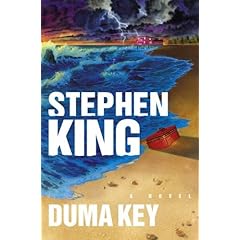
Book Report: Stephen King's Duma Key


I don't understand why my favorite authors are often considered to be hacks. I kind of take that as a personal insult. Is prolificacy (prolificness?) and success somehow a bad thing? Two of those favorites are Stephen King and Dean Koontz.

The most recent Koontz book I've read was The Good Guy, a story of mistaken identity, where the protagonist is taken for a hit man. He spends the rest of the book protecting the intended victim (a compatible female, natch). It wasn't his best book, but I enjoyed it. I've rarely been disappointed by Koontz. My only beef is (excepting the omnipresent golden or Labrador retriever) is that his characters tend to repeat: a perfect man and a perfect woman meet under dire, supernatural circumstances and banter amusingly while being attacked.

Stephen King doesn't do that. His characters are unique, and distinctly drawn. The stories are rich, and dense (too wordy for some people). In Duma Key, the protagonist is a successful building contractor, critically injured in a construction site accident. After a painful recovery (and the abandonment of his wife), he makes a new life in the Florida Keys. There, he takes up painting, and finds that his paintings not only depict past, present and future events, they can affect them.

The writing is very descriptive, and played in my mind like a movie--or mini-series. If I have any complaint, it would be that the setting does not resemble the Keys I'm familiar with. But I can reason that away fairly easily. The supernatural villain made it that way! There we go, all fixed.

So, if you want a good summer read (and a lengthy one at that), you'd be hard pressed to do any better than Duma Key. Buy it (or check it out), you'll thank me later.

Recommended
Related Posts Plugin for WordPress, Blogger...